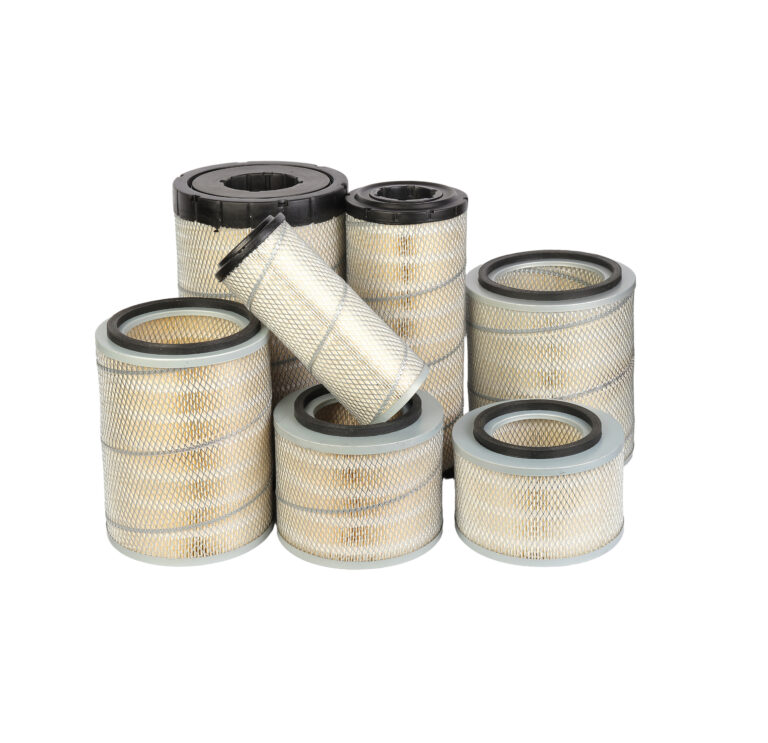
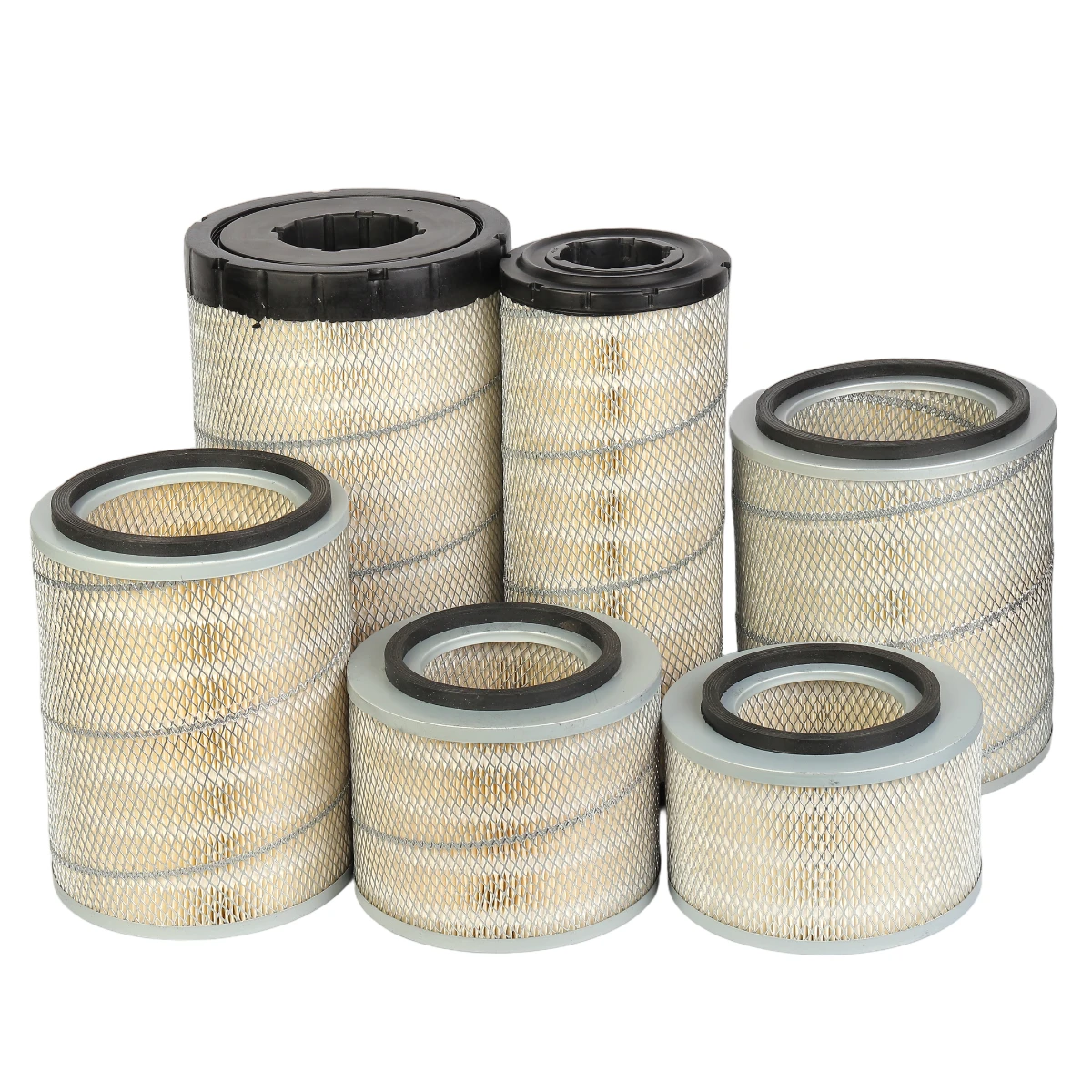
How does an air filter work?
Air filters operate on the core principle of separating harmful particles from air while ensuring unobstructed airflow to engines, machinery, or ventilation systems. The exact process varies slightly by filter type (e.g., paper, synthetic, oiled), but all rely on one or more of four key filtration mechanisms—plus thoughtful design to balance efficiency and airflow. Below’s a step-by-step breakdown of how it works, with real-world examples tied to industrial and vehicle use cases.

Step 1: Air Intake – The “Starting Point”
First, air is drawn into the equipment (e.g., a truck engine, excavator, or generator) through an air intake system. This air is rarely clean: it may contain dust, sand, pollen, road grit, or even tiny metal shavings (common in construction sites). The air filter is positioned between the intake and the engine/machinery core—acting as a “gatekeeper” to block impurities before they can cause damage.
For example: In a heavy-duty truck, the air intake pulls in outside air as the engine runs. Before this air reaches the combustion chamber (where fuel mixes with air to power the engine), it passes through the air filter mounted in the filter housing near the engine bay.
Step 2: Filtration Mechanisms – How Particles Get Trapped
Different filter media use distinct methods to catch particles—often combining 2–3 mechanisms for better efficiency. Here are the most common, with how they apply to your products:
1. Mechanical Straining (Most Basic)
This works like a sieve: the filter media has tiny pores that let air molecules pass through, but block particles larger than the pore size.
- Example: Paper air filters (used in many light-duty trucks) have pores sized 5–20 microns. This traps sand grains (typically 50+ microns) and large dust clumps, while letting air flow freely. For construction machinery filters (which need to handle finer dust), the paper pores may be smaller (2–5 microns) to catch even tiny concrete particles.
2. Inertial Impaction (For Medium-Sized Particles)
When air flows through the filter, it bends around the fibers of the media. Heavier particles (e.g., sand, metal bits) can’t “follow” the curved airflow—they hit the fibers and get stuck.
- Example: Synthetic fiber filters (used in off-road machinery) rely heavily on this. The media’s fibers are arranged in a zigzag pattern, forcing air to change direction repeatedly. Pollen grains (10–100 microns) and small dust particles get knocked into the fibers, while light air molecules keep moving.
3. Diffusion (For Tiny Particles)
Extremely small particles (0.1–0.3 microns, like fine soot or smoke) move randomly (called “Brownian motion”) instead of following airflow. This random movement makes them collide with filter fibers and get trapped.
- Example: HEPA filters (used in generator sets for sensitive facilities, like data centers) use diffusion to capture almost all tiny particles. Since generators in data centers can’t risk dust damaging internal components, HEPA media’s dense fiber network maximizes these collisions—achieving 99.97% efficiency for 0.3-micron particles.
4. Electrostatic Attraction (Enhanced Capture)
Some advanced filters (e.g., electrostatic synthetic filters) have a slight electric charge on the media fibers. When neutral or oppositely charged particles pass by, they’re pulled to the fibers and stuck—even if they’re smaller than the media pores.
- Example: Oiled air filters (used in high-dust environments like quarries) use a similar “attraction” principle. The oil coating on the media acts like a sticky surface, grabbing particles that might otherwise slip through. After cleaning, re-oiling restores this sticky layer to maintain efficiency.
Step 3: Airflow Maintenance – The “Balance” That Matters
A filter’s job isn’t just to trap particles—it must also let enough air through to keep the equipment running. Poor airflow leads to reduced power, higher fuel consumption, or overheating.
To avoid this, filter design focuses on:
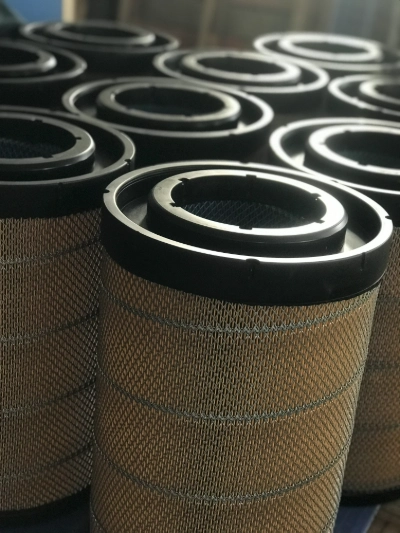
- Media thickness: Thicker media traps more particles but can restrict airflow—so manufacturers (like yours) use layered media (e.g., a coarse outer layer + fine inner layer) to balance capture and flow.
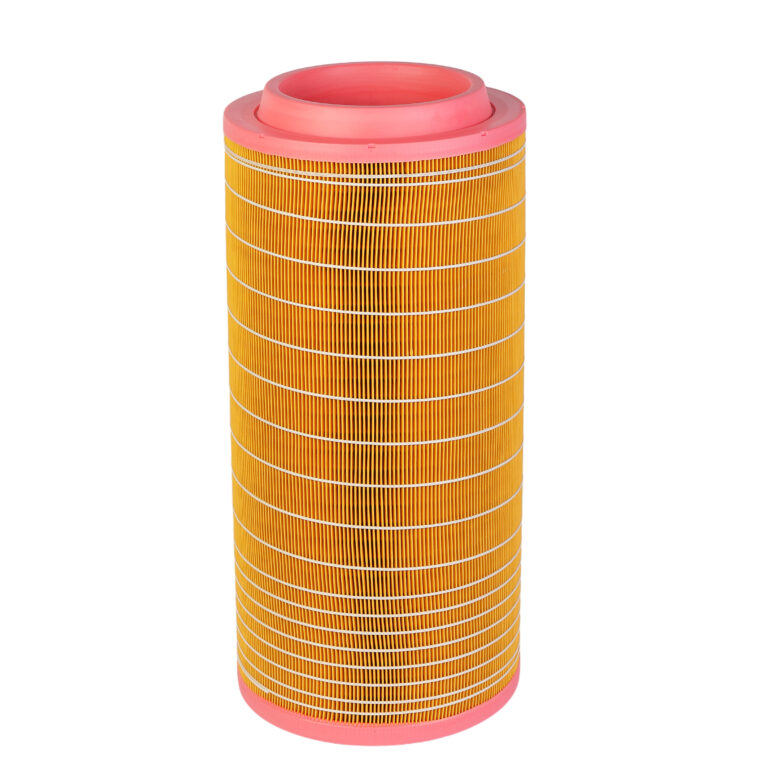
- Filter size: Larger filters (e.g., those for heavy-duty generators) have more surface area, so they can trap more dust without clogging quickly—extending lifespan while maintaining airflow.
- Frame and seal design: Rigid frames keep the media from collapsing (which would block airflow), while tight rubber seals prevent “bypass air” (unfiltered air sneaking around the media edges).
Step 4: When It’s Time to Replace – The “Clogging” Signal
Over time, trapped particles build up on the media, narrowing the pores and restricting airflow. This is when the filter stops working effectively—either letting particles pass through (as pores get blocked and air finds alternative paths) or starving the equipment of air.
You can spot this by:
- Reduced equipment performance (e.g., a truck accelerating slower, a generator struggling to maintain power).
- Increased fuel use (e.g., a bulldozer using 5% more diesel than usual).
- Visible dust caking on the media (when you inspect the filter).
Real-World Example: How It Works for a Construction Excavator
Let’s tie it all together with an excavator on a building site:
- The excavator’s engine pulls in air full of concrete dust and sand.
- Air passes through the excavator’s heavy-duty synthetic air filter.
- Large sand grains are strained out by the media pores; medium dust particles hit the fibers via inertial impaction; tiny concrete particles are trapped by diffusion.
- Clean air flows to the engine, keeping combustion efficient and internal parts safe.
- After 80 working hours (typical for construction use), the filter is caked with dust—so it’s replaced to avoid airflow loss and engine damage.
In short, an air filter is a carefully engineered “separator” that uses science (filtration mechanisms) and design (airflow balance) to protect equipment. Every part—from the media to the seal—works together to keep particles out and clean air in.