
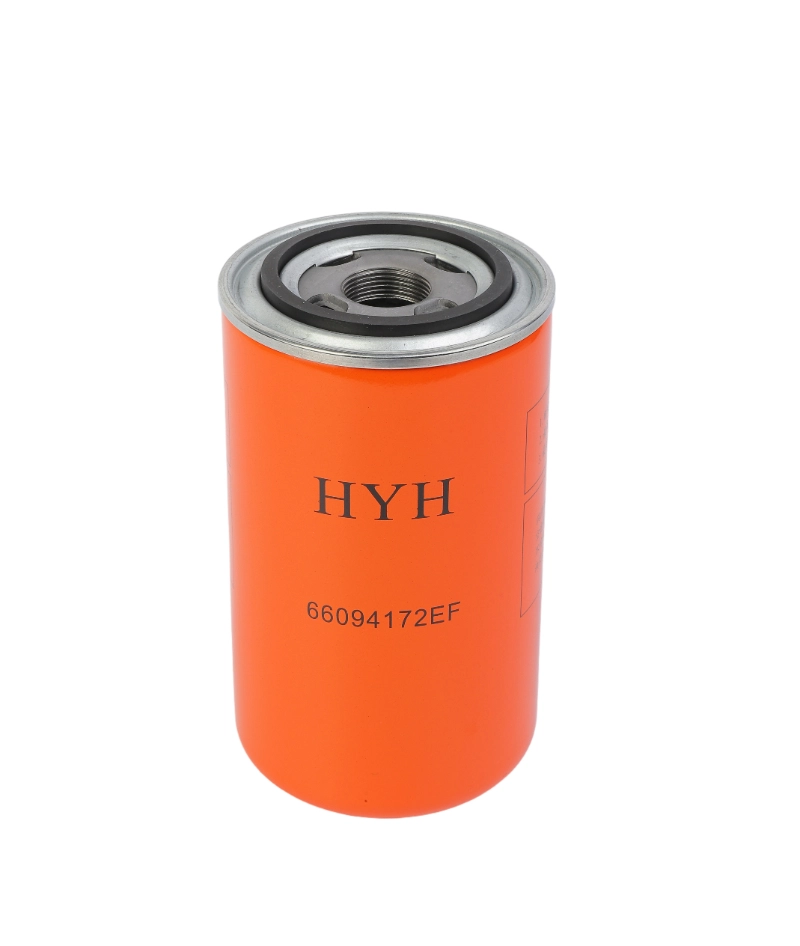
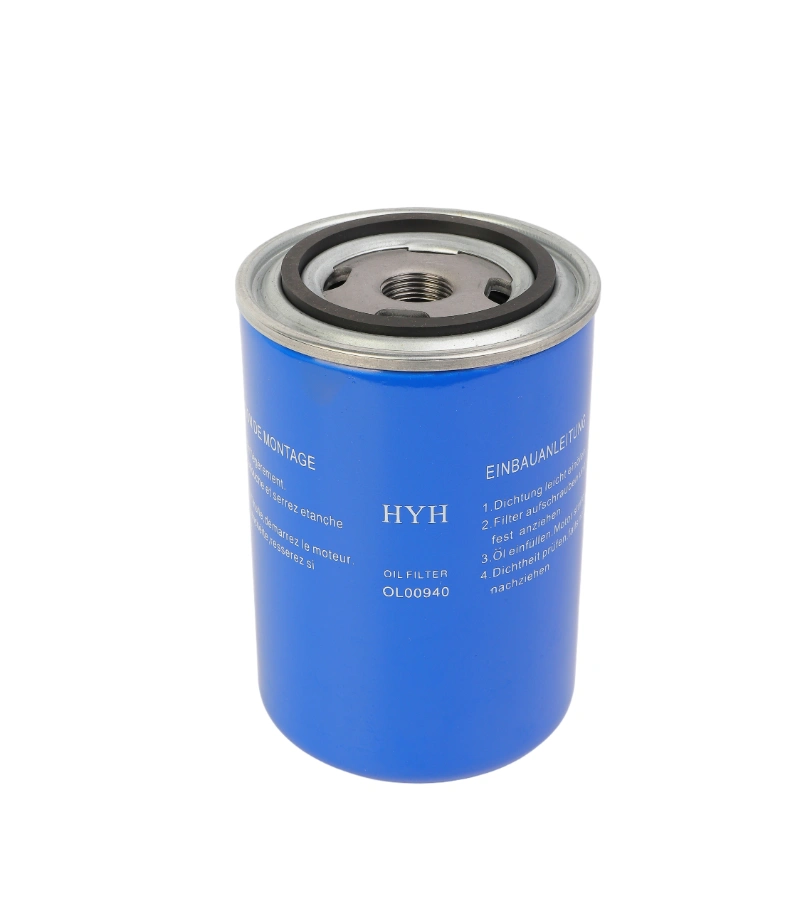
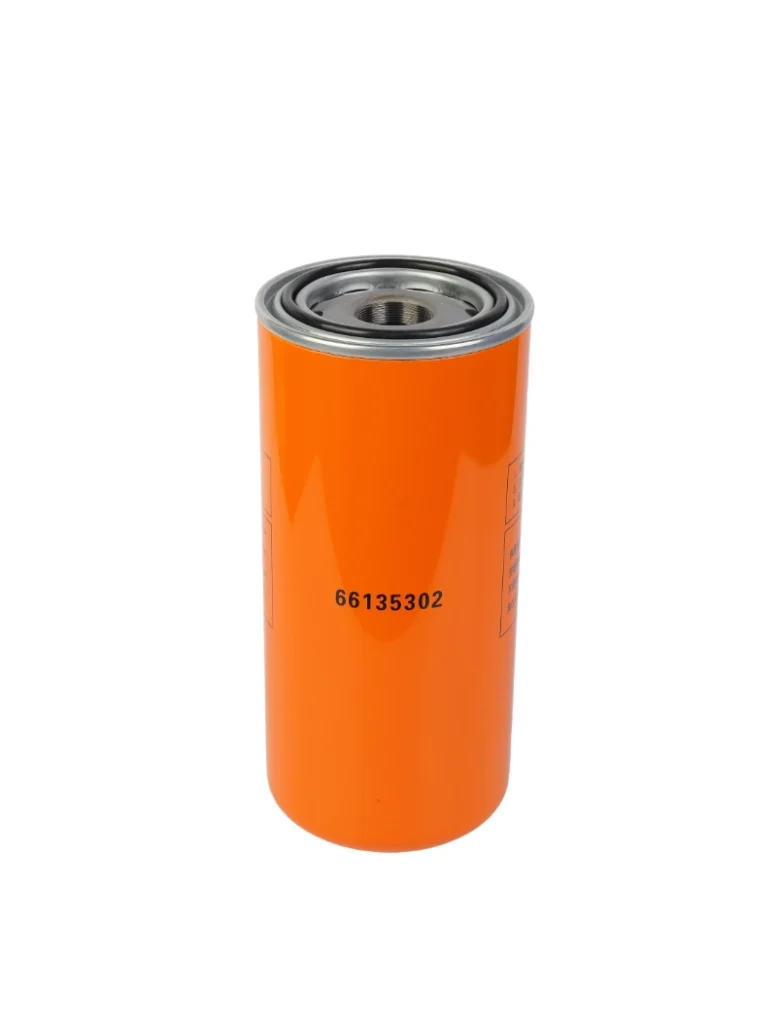
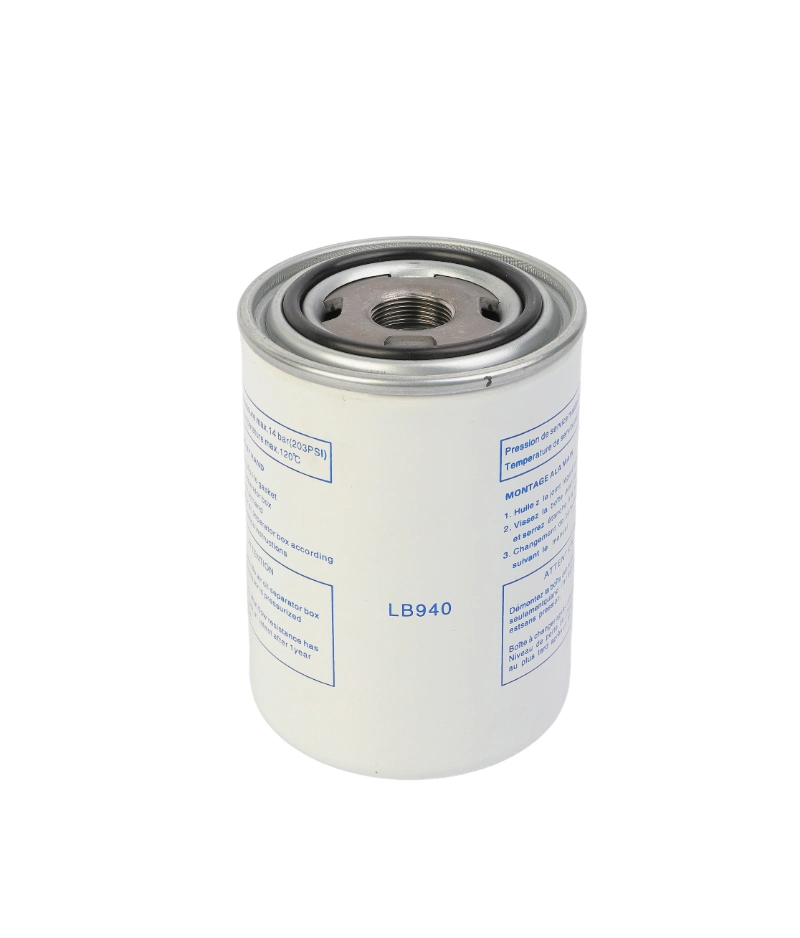
Compressor Spin-On Oil Filter
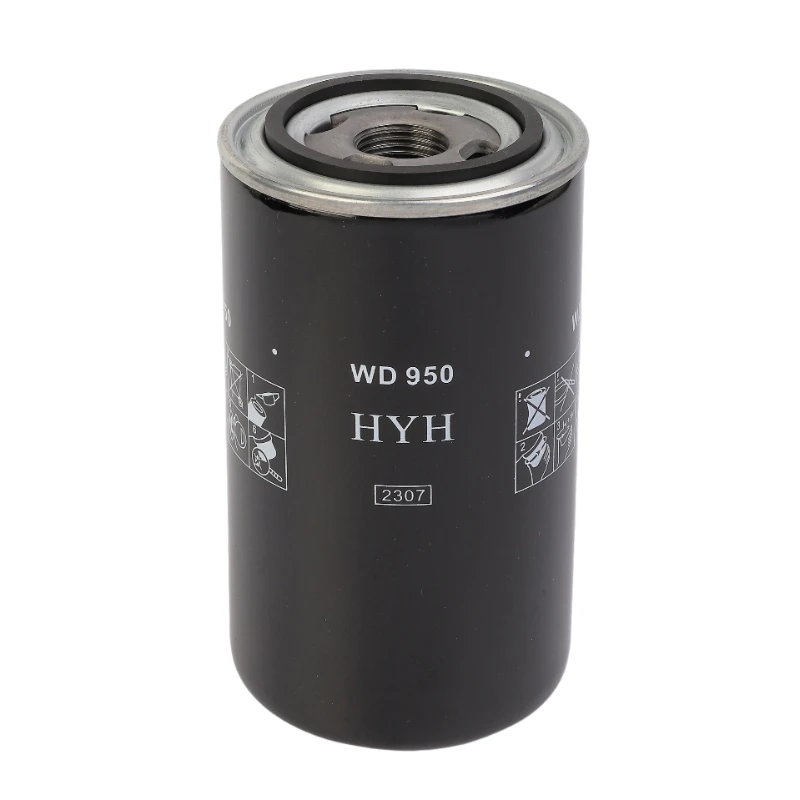
1. Overview The Compressor Spin-On Oil Filter WD950 is a heavy-duty filtration component engineered exclusively for industrial screw-type and reciprocating air compressors—key equipment in manufacturing, construction, and logistics. Unlike vehicle…
1. Overview
The Compressor Spin-On Oil Filter WD950 is a heavy-duty filtration component engineered exclusively for industrial screw-type and reciprocating air compressors—key equipment in manufacturing, construction, and logistics. Unlike vehicle oil filters, the WD950 is designed to withstand the harsh operating conditions of compressors: continuous high-pressure (up to 1.6 MPa) operation, elevated oil temperatures (100–120°C), and exposure to dust-laden air. As a core part of the compressor’s lubrication system, it plays a critical role in removing contaminants (e.g., metal shavings from rotor wear, carbon deposits from oil oxidation) from lubricating oil, protecting precision components like bearings, rotors, and valves. By ensuring clean oil circulation, the WD950 extends compressor service life, reduces downtime, and maintains stable air output—critical for businesses relying on continuous compressed air supply.
2. Equipment Compatibility
2.1 Compressor Type & Model Range
The WD950 is tailored for mid-to-large industrial compressors, covering mainstream types and configurations:
- Screw-Type Air Compressors: Compatible with fixed-speed and variable-frequency (VFD) screw compressors with power ratings of 37 kW–160 kW, including models from brands like Atlas Copco GA Series (GA75–GA160), Ingersoll Rand UP Series (UP6–UP15), and Sullair LS Series (LS16–LS32). These compressors are widely used in automotive factories, textile mills, and packaging plants for high-volume air supply.
- Reciprocating Air Compressors: Fits heavy-duty reciprocating compressors (20 HP–100 HP) used in mining, construction, and shipbuilding—scenarios where compressors operate under high load for extended periods.
- Oil-Injected Compressors: Optimized for oil-injected compressor lubrication systems (the most common type for industrial use), where oil not only lubricates but also cools and seals rotors. The WD950’s filtration efficiency ensures oil maintains its cooling and sealing properties.
2.2 Lubricant & System Adaptability
- Lubricant Compatibility: Works seamlessly with all industrial compressor oils, including mineral-based compressor oil (ISO VG 46/68), synthetic compressor oil (PAO/PAG-based), and semi-synthetic blends. It resists chemical reactions with oil additives (e.g., anti-oxidants, anti-wear agents), avoiding sludge formation or oil degradation.
- System Pressure & Flow: Matches the oil flow rate (80–150 L/h) and working pressure (0.8–1.6 MPa) of mid-to-large compressors, ensuring no pressure drop that could disrupt lubrication or air output.
3. Working Principle
3.1 Multi-Stage Filtration Mechanism
The WD950 adopts a three-layer composite filter media structure to target contaminants of varying sizes, optimized for compressor oil’s unique impurity profile:
- Outer Coarse Filtration Layer: Made of high-strength polyester fiber (20–30 μm pore size), it traps large impurities like metal shavings (from rotor or bearing wear) and dust particles (sucked into the oil system via air intake). This reduces the load on inner layers and prevents premature clogging.
- Middle Fine Filtration Layer: Borosilicate glass fiber (5–10 μm pore size) captures fine particles such as carbon deposits (from oil oxidation at high temperatures) and wear debris (from piston ring or valve friction)—the primary cause of bearing failure in compressors.
- Inner Support & Adsorption Layer: Reinforced cellulose with activated carbon additives (1–3 μm filtration precision) removes ultra-fine contaminants (e.g., soot, oil oxidation byproducts) and absorbs moisture (a common issue in humid environments that causes oil emulsification). The cellulose layer also prevents media collapse under high oil pressure, ensuring consistent filtration even at full load.
3.2 Safety Protection Valves
To address compressor-specific safety risks, the WD950 integrates two critical valves:
- Bypass Valve: Calibrated to open at 0.25 MPa pressure differential. If the filter clogs (e.g., due to extended use in dusty environments), the valve opens to allow unfiltered oil to bypass—preventing oil starvation of the compressor’s bearings (which can cause catastrophic failure). The valve’s setting matches the minimum oil pressure required for compressor operation.
- Anti-Drain Back Valve: Made of high-temperature silicone (resistant to 150°C), it seals the filter when the compressor stops, preventing oil from draining back to the oil sump. This eliminates “dry starts” (a major cause of bearing wear in compressors) and ensures immediate oil circulation on restart—critical for compressors with frequent on-off cycles (e.g., VFD models).
4. Key Features and Benefits
4.1 Industrial-Grade Durability
- High-Temperature & Pressure Resistance: The filter housing is made of glass-fiber reinforced PP (polypropylene) with a heat-resistant coating, capable of withstanding temperatures from -30°C to 140°C and pressure up to 2.0 MPa. It resists deformation or cracking under the continuous high-temperature, high-pressure conditions of compressor operation—unlike generic filters that use thin plastic housings.
- Corrosion & Contamination Resistance: The housing’s inner surface is treated with an anti-corrosion layer, preventing rust or oil residue buildup (common in compressors operating in humid or dusty environments). This ensures the filter maintains its structural integrity for the entire service life.
4.2 Efficiency & Cost Savings
- High Filtration Efficiency: Achieves 99.8% filtration efficiency for particles ≥5 μm and 95% for particles ≥1 μm—exceeding industry standards for compressor oil filters. Field tests show compressors using the WD950 have a 40% reduction in bearing replacement frequency and a 25% extension in oil change intervals (from 4,000 hours to 5,000 hours).
- Low Flow Resistance: The internal flow channel is optimized via CFD (Computational Fluid Dynamics) to minimize pressure drop (≤0.05 MPa at maximum flow). This ensures the compressor’s oil pump does not work harder than necessary, reducing energy consumption by 2–3%—a significant saving for compressors operating 24/7.
- High Contaminant Capacity: The filter media’s large surface area (1.2 m²) traps up to 15 grams of contaminants—30% more than standard compressor oil filters. This extends the filter’s service life to 2,000–3,000 hours (under normal conditions), reducing filter replacement frequency and maintenance labor costs.
4.3 User-Friendly Design
- Spin-On Installation: The filter features a 1-inch-12 UN thread (compatible with most mid-to-large compressors’ oil filter housings) and a knurled outer surface for easy hand tightening. No specialized tools are required—maintenance teams can replace the filter in 5–10 minutes, minimizing downtime.
- Leak-Proof Seal: Equipped with a nitrile rubber gasket (resistant to oil and high temperatures) that creates a tight seal between the filter and housing. Unlike cheap foam gaskets, it does not harden or crack over time, preventing oil leaks that could damage the compressor or workplace.
5. Maintenance and Replacement
5.1 Inspection Guidelines
- Visual & Pressure Checks: Every 500 hours of operation, inspect the filter housing for leaks (focus on the gasket-sealing surface) and check the compressor’s oil pressure gauge. If oil pressure drops by more than 0.1 MPa (indicating a clogged filter), replace the WD950 immediately.
- Oil Quality Monitoring: Pair filter inspection with oil analysis (recommended every 1,000 hours). If oil analysis shows high contaminant levels (e.g., iron content >15 ppm) or moisture (>0.1%), replace the filter early to avoid component damage.
5.2 Replacement Interval
- Normal Conditions: Replace the WD950 every 2,000–3,000 hours of operation (or every 6 months, whichever comes first) for compressors in clean environments (e.g., indoor factories with air filtration).
- Severe Conditions: Shorten the interval to 1,500–2,000 hours for compressors in harsh environments:
- Dusty settings (e.g., construction sites, mining).
- Humid climates (relative humidity >80%).
- Continuous high-load operation (100% duty cycle).
5.3 Installation Steps
- Prepare the Compressor: Turn off the compressor, close the oil inlet valve, and release pressure via the air tank drain valve. Wait 15 minutes for oil to cool and drain back to the sump.
- Remove the Old Filter: Use a filter wrench (if needed) to loosen the old filter counterclockwise. Drain residual oil into a collection pan (dispose of used oil and filter per local environmental regulations).
- Prep the New Filter: Apply a thin layer of clean compressor oil to the WD950’s rubber gasket (prevents gasket damage and ensures a tight seal).
- Install the New Filter: Screw the filter on by hand until the gasket contacts the housing, then tighten an additional 1/4 turn (do not over-tighten—this can warp the gasket or damage the housing thread).
- Verify Installation: Open the oil inlet valve, start the compressor, and idle for 10 minutes. Check for leaks around the filter housing—if none are present, resume normal operation.
6. Conclusion
The Compressor Spin-On Oil Filter WD950 is a “workhorse” filtration solution for industrial compressors, engineered to withstand harsh conditions while delivering reliable protection. By combining high filtration efficiency, industrial-grade durability, and user-friendly design, it addresses the core needs of businesses relying on compressors: minimizing downtime, reducing maintenance costs, and ensuring consistent performance. For factory managers, maintenance teams, and compressor operators, the WD950 is not just a filter—it’s an investment in the longevity and efficiency of critical production equipment. Whether powering a manufacturing line or a construction site, the WD950 ensures compressors run smoothly, safely, and cost-effectively.